

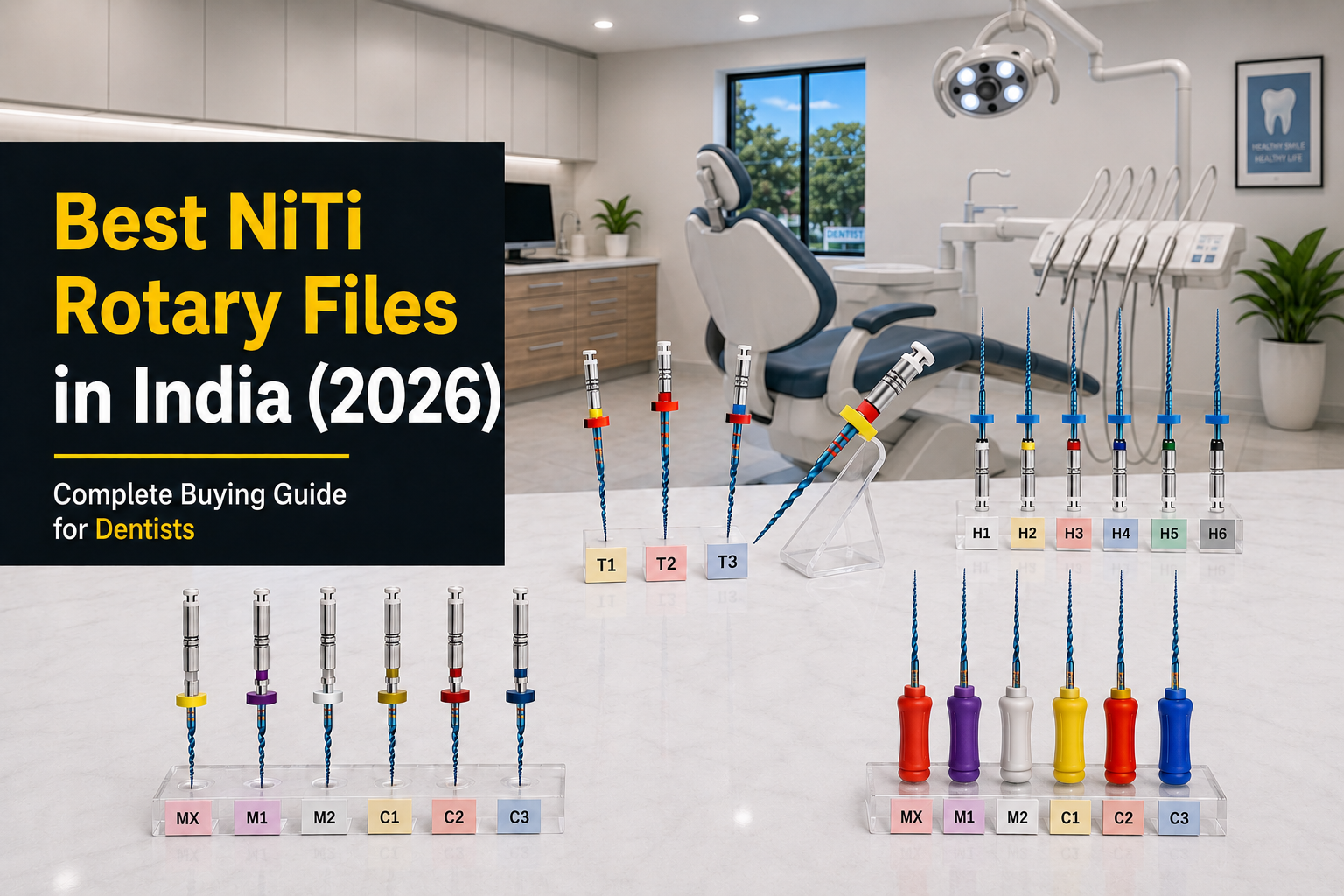
Best NiTi Rotary Files in India (2026): Complete Buying Guide for Dentists
If you have practised endodontics for a few years, you know that the quality of your rotary files in India directly affects how smoothly canal shaping goes - and how often you deal with separated instruments, ledges, or underprepared canals. With the Indian market now flooded with options across brands, alloy generations, and motion systems, choosing the right file system has become genuinely complicated. This guide covers what actually matters clinically - alloy metallurgy, motion type, taper selection, and the parameters worth checking before you order - so you can make a well-informed decision for your practice.
Why Most Experienced Endodontists Have Moved Away from Stainless Steel
This is not new information for most of us, but it is worth stating clearly for colleagues who are still transitioning. Stainless steel files have a fundamental limitation - they resist bending. In any canal with moderate to severe curvature, that rigidity causes transportation, ledging, and zip formation. The canal ends up shaped around the file rather than the file following the canal.
NiTi changed this. The superelastic property of nickel-titanium allows the file to flex passively through curved anatomy and return to its original shape - without permanently deforming or exerting outward pressure on the canal walls. The clinical results speak for themselves: better-centred preparations, fewer errors, and significantly faster shaping times compared to hand instrumentation.
For any colleague still using stainless-steel hand files as the primary shaping instrument, switching to NiTi rotary instruments is the single most impactful upgrade you can make to your endodontic workflow.
NiTi Alloy Generations: This Is What Actually Separates Good Files from Great Ones
Most dentists focus on brand names when selecting files. A more useful approach is to compare the alloy generation, because that determines how the file behaves in your hands, particularly in challenging anatomy, and helps you judge which system fits your clinical needs.
First Generation - Conventional Austenitic NiTi
Standard NiTi in its austenitic phase at room temperature. Adequate cutting efficiency for straight or mildly curved canals, but comparatively brittle in severe curvatures. Cyclic fatigue resistance is lower in later generations. This is the entry-level option you will commonly find at the lowest price points - workable for straightforward cases, but not ideal for complex anatomy.
Second Generation - Thermally Treated NiTi (M-Wire / Gold Wire)
Heat treatment shifts the alloy partially into the martensitic phase at room temperature. The practical result is significantly greater flexibility and fatigue resistance compared to conventional NiTi. These files handle moderate-to-severe curvatures far more predictably. ProTaper Gold and WaveOne Gold are internationally recognised examples of this generation. For most mixed caseloads in Indian general and specialist practice, this is the generation worth using.
A 2024 in vitro study conducted at Government Dental College and Hospital, Patiala evaluated dentin microcrack formation across four NiTi rotary systems - including ProTaper Gold and NeoEndo Flex - and found meaningful differences in crack incidence based on file design and alloy. Findings like these reinforce why alloy generation and cross-sectional geometry deserve more attention than brand name alone when selecting a file system.
Third Generation - CM Wire (Controlled Memory Wire)
The most clinically advanced option currently available. CM wire files do not exhibit shape memory - they stay in the bent position rather than springing back. This means minimal outward force on canal walls during instrumentation, which is particularly valuable in retreatment cases, calcified canals, or unusually complex multi-curved anatomy. If you are handling a high proportion of such cases, CM wire files are worth the additional cost.
Clinical note: For day-to-day mixed endodontic practice in India, a thermally treated second-generation system gives you the best balance of safety, flexibility, and value. Reserve CM wire for the cases that genuinely need it.
How Rotary File Systems Have Evolved: A Brand Timeline
Beyond alloy metallurgy, rotary file systems are also commonly grouped by their generation of introduction to the market:
- 1992 onwards: First NiTi rotary systems - LightSpeed, Profile, GT
- 2001 onwards: ProTaper Universal, K3, Mtwo, i-Race
- 2008 onwards: Heat-treated systems - K3 XF, GTX, HyFlex CM, Vortex Blue
- 2011 onwards: Reciprocating single-file systems - WaveOne, Reciproc, SAF
- 2013 onwards: Gold/thermally-optimised single-file systems - ProTaper Gold, One Shape, Hero Gold, NeoEndo Flex
This timeline is useful context, but for a buying decision, the alloy generation and motion type discussed above (which determine how a file actually behaves in your hands) matter more than which "generation" a brand markets itself as.
Rotary vs. Reciprocating: A Practical Clinical Comparison
Continuous Rotary Motion
The file rotates continuously in one direction at a set RPM - typically 250 to 350 rpm. Most continuous rotary systems use a sequence of 3 to 6 files with progressively increasing taper, moving from coronal to apical in a crown-down technique. The multi-file sequence gives good tactile feedback at each step, which is why most endodontic postgraduate programmes still teach continuous rotary as the foundation. If you are introducing rotary instrumentation to a junior colleague or associate, start here.
Reciprocating Motion
The file alternates between a larger cut angle and a smaller release angle - the asymmetric motion significantly reduces cyclic fatigue compared to continuous rotation. This allows a single file to complete full canal shaping in most cases, which reduces per-case consumable cost and shortens procedure time. For a busy clinic doing high volumes of straightforward RCT cases, reciprocation is efficient and clinically sound.
| Continuous Rotary | Reciprocating | |
| Files per case | 3–6 | 1–2 |
| Tactile feedback | Better | Moderate |
| Shaping speed | Moderate | Faster |
| Learning curve | Lower | Slightly higher |
| Per-case file cost | Moderate | Lower |
| Best suited for | All practice types | High-volume clinics |
Neither system is universally superior. Your choice should match your case mix, your endomotor's capability, and your own clinical comfort level.
Taper Selection: What the Numbers Actually Mean in Practice
Taper is the increase in file diameter per millimetre of length. Standard ISO hand files carry a 0.02 taper - rotary NiTi files typically come in 0.04 and 0.06, with some systems using variable taper along the flute.
| Taper | Best Suited For | Important Consideration |
| 0.02 | Narrow, calcified canals | Used primarily for glide path establishment with hand files |
| 0.04 | Straight to moderately curved - most routine cases | The standard starting taper for Indian general and specialist practice |
| 0.06 | Wide, straight canals only | Avoid in curved anatomy - excessive dentin removal weakens the root |
| Variable | Complex, multi-curved canals | Adapts well to irregular canal walls |
One thing that cannot be emphasised enough: always establish a glide path with a size 10 or 15 K-file before introducing any NiTi rotary instrument. A confirmed glide path is not optional - it is the most effective single step for preventing file separation, and it takes less than two minutes per canal.
5 Things Worth Checking Before You Order Rotary Files in India
Before placing your next order for rotary files in India, these are the parameters that actually matter:
1. Alloy generation and heat treatment The product listing should clearly state whether the file uses conventional NiTi, thermally treated alloy, or CM wire. If that information is not visible, do not guess - ask the supplier or choose a product that is transparent about its metallurgy.
2. Cross-sectional design: S-shaped cross-sections are efficient at clearing debris from the flutes. Triangular designs cut aggressively. Convex triangular designs reduce torsional stress on the file. Match the design to the complexity of cases you are handling most often.
3. File sequence length: A 3-file sequence completes shaping faster and costs less per case. A 6-file sequence gives finer incremental control. Neither is inherently better - choose based on your case complexity and workflow preference.
4. Endomotor compatibility: NiTi rotary files must be run on a dedicated torque-controlled endomotor. This is non-negotiable. Check that the RPM and torque values recommended by the file manufacturer fall within the programmable range of your motor. Running rotary files outside their specified parameters is a leading cause of instrument fracture in clinical practice.
5. Consistent availability: A file system you cannot reliably reorder disrupts your clinical workflow. For colleagues in India, sourcing from a verified Indian dental supplier with maintained inventory makes a practical difference. Dentosky stocks a wide range of NiTi endo files from trusted brands, with 24–48 hour delivery across Gujarat and free shipping on orders above ₹2,000 - so restocking between cases is straightforward.
Preventing File Separation: Clinical Habits That Make a Real Difference
Separated instruments are one of the most discussed complications in endodontics - and most cases are preventable. These are the habits that experienced clinicians consistently follow:
- Confirm the glide path before every case - this single step prevents the majority of separation incidents
- Use files as single-use instruments - most NiTi rotary files are designed for one patient; repeated use across cases multiplies fatigue fracture risk significantly
- Do not exceed the manufacturer's torque and RPM - increasing speed to push through a tight canal is how instruments separate
- Work with a passive pecking motion - let the file cut on the way in; never force it apically
- Inspect every file before reinsertion - look for flute unwinding, deformation, or any change in geometry
- Use your endomotor's auto-torque reverse function - a quality motor automatically reverses when torque exceeds the set limit, which is your most reliable mechanical safety net against torsional fracture
Building a Complete Endodontic Setup Around Your Rotary Files
Rotary files perform at their best when the rest of your endodontic armamentarium supports them. For consistently good outcomes, your setup should work as an integrated system:
- NiTi endo files - full range available at Dentosky
- Torque-controlled endomotor - browse endomotors at Dentosky
- Apex locator - An apex locator enables electronic working length confirmation before shaping begins for accurate canal preparation.
- Irrigation protocol - An irrigation protocol using 3% NaOCl and 17% EDTA remains the clinical standard for canal debridement and effective canal cleaning.
- Root canal sealer - for three-dimensional obturation, we have covered bioceramic sealers in detail in a separate guide if you want a thorough look at the current options
When these components work together, procedural complications drop noticeably - and so does the time you spend managing them.
FAQs: Rotary Files in India
Can NiTi rotary files be reused across patients?
Rotary or reciprocating - which should I be using?
Is a dedicated endomotor really necessary?
What taper should I start with as a routine?
Examples of Rotary File Systems Available at Dentosky by Type
To put the above into context, here is how some of the rotary and endodontic instrumentation options currently stocked at Dentosky map to the categories discussed in this guide:
| Type | Product Available at Dentosky | Product Photo | Notes |
| Multi-file rotary sequence | Flexer Trio T1-T3 | 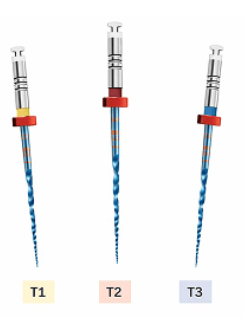 | 3-file rotary sequence (T1, T2, T3) using heat-activated NiTi - fits the continuous rotary, crown-down approach discussed above |
| Single-file rotary | Flexer One | 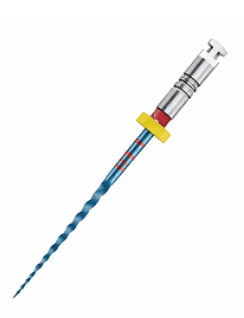 | Heat-treated NiTi single-file system, suited to high-volume straightforward cases |
| Hybrid taper rotary | Flexer Hybrid 15-40 4% | 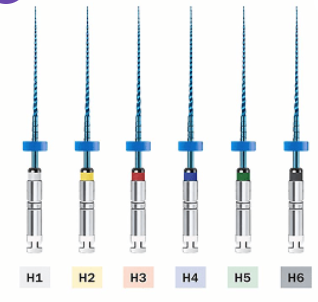 | 4% taper across 15-40 sizes - matches the 0.04 taper recommendation for routine cases |
| Heat-activated rotary for curved canals | Flexer Heat Activation MX-C3 (Engine Use) | 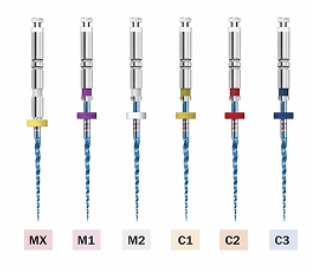 | Heat-activated NiTi designed for curved and narrow canals |
| NiTi hand files (glide path / manual sequence) | Flexer Heat Activation MX-C3 (Hand Use) | 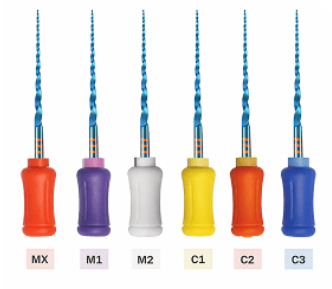 | Heat-treated NiTi hand files (M1, M2, C1-C3) - useful for glide path or manual shaping in complex anatomy |
All of these come in both 21 mm and 25 mm lengths.
All of these are available with full specifications on the Endo Files page at Dentosky, so you can match the alloy generation and motion type discussed above to a product you can order directly.
Where to Source Rotary Files in India
For colleagues looking to order rotary files in India from a reliable source, the practical considerations are consistent availability, authentic products, and clear specifications - not just the lowest price per pack.
Dentosky carries a well-stocked range of NiTi endo files from established brands, with detailed product information so you know exactly what alloy and sequence you are ordering. Delivery across Gujarat in 24–48 hours means you are not waiting on stock between cases. The endomotors, apex locators, irrigation supplies, and root canal sealers you need alongside your files are available on the same platform - which keeps your procurement straightforward.