

Best GDC Orthodontic Pliers in India (2026): Complete Buying Guide
Ask five orthodontists what's actually in their tray. You'll get five different plier combinations, but GDC orthodontic pliers in India show up in almost every one of them - not because there isn't competition, but because the range is broad enough to cover the full clinical workflow from band placement to final wire adjustment without hunting across brands. This guide walks through all 13 GDC pliers and cutters worth knowing, what each one is actually for, and where the real overlap is if you're trying to build a tray without duplicating function.
Why GDC Still Anchors Most Ortho Trays
Stainless steel build quality that survives repeated autoclaving without the joint loosening is the baseline requirement for any orthodontic plier, and it's where a lot of budget alternatives fail within a year of daily use. GDC's range holds up on this front consistently enough that it's become close to a default recommendation rather than a considered choice for most general and ortho-focused practices in India. That doesn't mean every instrument in the line is essential for every practice - a lot of the value here is in knowing which of these 13 you actually need versus which ones are workflow-specific enough to skip if you're not doing that particular technique regularly.
Core Pliers: Placement, Adjustment, Removal
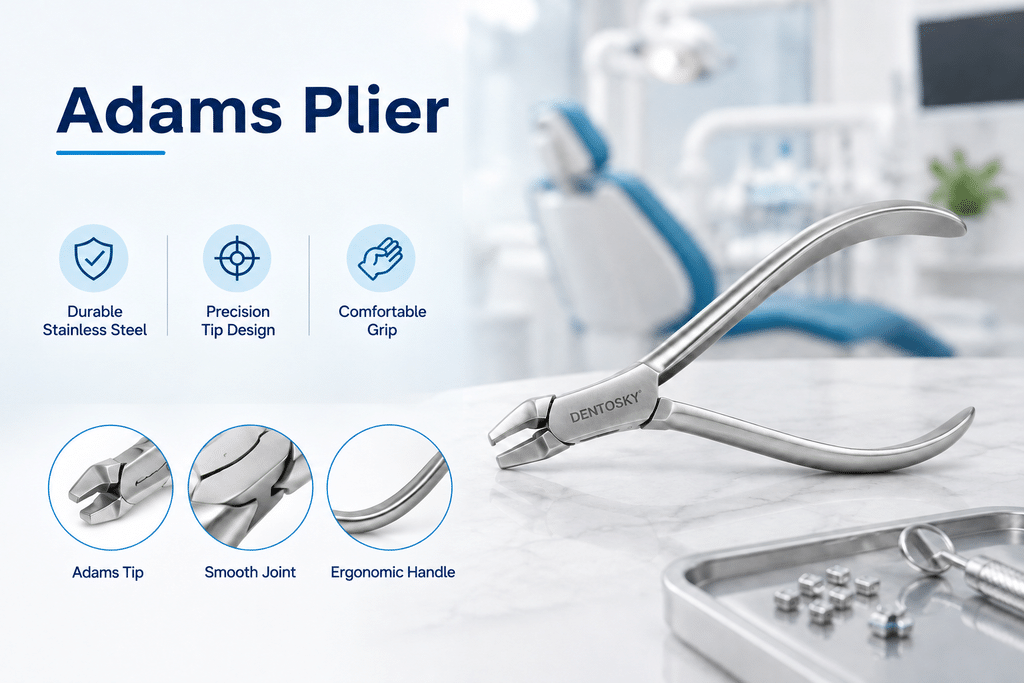
Among GDC orthodontic pliers in India, the Adam's Plier and Universal Plier are the two you'll reach for most often - Adam's for adjusting clasps and appliance components, Universal for general wire bending and adjustment where you don't need a specialized tip. If your practice is doing removable appliance work at any real volume, both belong in the tray as non-negotiables rather than a "get one first, see if you need the other" decision.
The How Plier fills a more specific niche - placement and removal of archwires, with round and serrated tips designed for that repetitive in-and-out motion without marring the wire surface. It's worth keeping alongside Adam's and Universal rather than replacing either.
Band and Bracket Work
Bracket Holding Tweezer, Bracket Remover Straight Plier, and Posterior Band Remover Short Plier form a natural trio for anyone doing fixed appliance work. The tweezer handles precise bracket positioning during bonding - not a place to improvise with a general-purpose instrument if you want consistent bracket placement across cases. The two remover pliers split by what they're removing: brackets versus bands, and the short plier's reduced profile genuinely matters for posterior access where a longer instrument fights you on angulation.
The Jhonson Contouring Plier rounds this group out - contouring bands to fit tooth anatomy before cementation is a step that's easy to rush, and a purpose-built contouring plier gives you more control than adapting a general plier for the job.
Cutters: Where Most Trays Over-Buy
This is the category worth thinking through carefully rather than just stocking one of everything. Distal End Cutter and Distal End Cutter Flush Cut both trim wire ends distal to the last bracket - the difference is the flush cut variant leaves a genuinely flat, non-protruding end rather than the slightly angled cut of the standard version, which matters more for patient comfort than most people give it credit for. If you're only buying one, the flush cut version is generally the safer default for patient-facing wire ends.
Hard Wire Cutter is built for exactly what the name says - heavier gauge archwires that would chip a standard cutter's edge over repeated use. If your case mix leans toward stainless steel archwires rather than NiTi, this is worth having as a dedicated instrument rather than pushing your distal end cutters past their intended wire gauge.
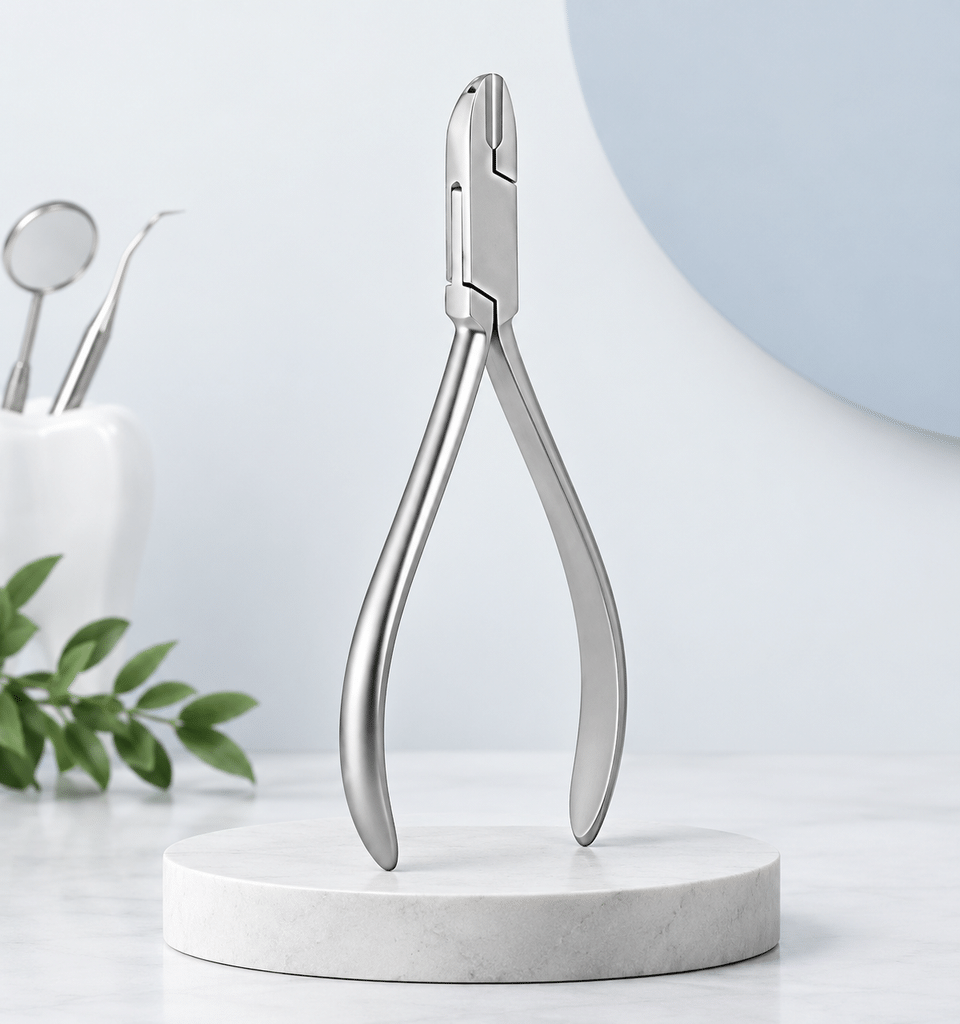
Ligature Cutter and Ligature Tucker are the lowest-cost items on this list but see disproportionate daily use - cutting and tucking ligature ties is a routine adjustment-visit task, and having dedicated instruments for it (rather than a multi-purpose cutter) genuinely speeds up chairside turnover on busy ortho days.
GDC Orthodontic Pliers: Quick Reference
Here's the full GDC orthodontic pliers lineup in India at a glance:
| Instrument | Primary Use | Price |
| Adam's Plier | Adjusting clasps and appliance components | ₹999 |
| Universal Plier | General wire bending and adjustment | ₹999 |
| How Plier | Archwire placement and removal | ₹999 |
| Bracket Holding Tweezer | Precise bracket positioning during bonding | ₹619 |
| Bracket Remover Straight Plier | Removing bonded brackets | ₹1,849 |
| Posterior Band Remover Short Plier | Removing posterior bands, reduced-profile access | ₹1,849 |
| Jhonson Contouring Plier | Contouring bands to tooth anatomy | ₹1,849 |
| Distal End Cutter | Trimming wire distal to last bracket | ₹2,749 |
| Distal End Cutter Flush Cut | Flush, non-protruding distal wire trim | ₹2,749 |
| Hard Wire Cutter | Cutting heavier-gauge stainless steel archwires | ₹2,749 |
| Ligature Cutter | Cutting ligature ties | ₹2,749 |
| Ligature Tucker | Tucking ligature tie ends | ₹309 |
| Wire Twister | Twisting and securing wire ligatures | ₹559 |
If you're outfitting a tray from scratch, the realistic core set is Adam's, Universal, How Plier, one distal end cutter, ligature cutter, and ligature tucker - roughly six instruments covering 80% of routine chairside work, with the band/bracket-specific pliers and hard wire cutter added based on your actual case mix rather than bought preemptively.
Sourcing and Sterilization Notes
Autoclave compatibility is standard across the GDC range. Still, joint wear from repeated sterilization cycles is the real long-term failure point on any plier - a slight loosening at the pivot shows up as imprecision in wire work well before the instrument looks visibly worn. For a periodic refresher on instrument reprocessing protocols beyond just autoclave cycle counts, the CDC's Summary of Infection Prevention Practices in Dental Settings is a useful reference for the team, particularly around inspection criteria for worn hinged instruments. Rotating two sets if you're running high patient volume, rather than autoclaving the same set multiple times a day, extends working life noticeably.
FAQs
Do I need both the standard and flush-cut distal end cutters, or is one enough?
What's the actual difference between the ligature cutter and using scissors for ligature ties?
How often should GDC pliers be replaced rather than just resharpened or serviced?
Is it worth buying a full 13-instrument set upfront, or building the tray gradually?
If you're building out or restocking an orthodontic tray, browse the full range on Dentosky by instrument type and brand.