
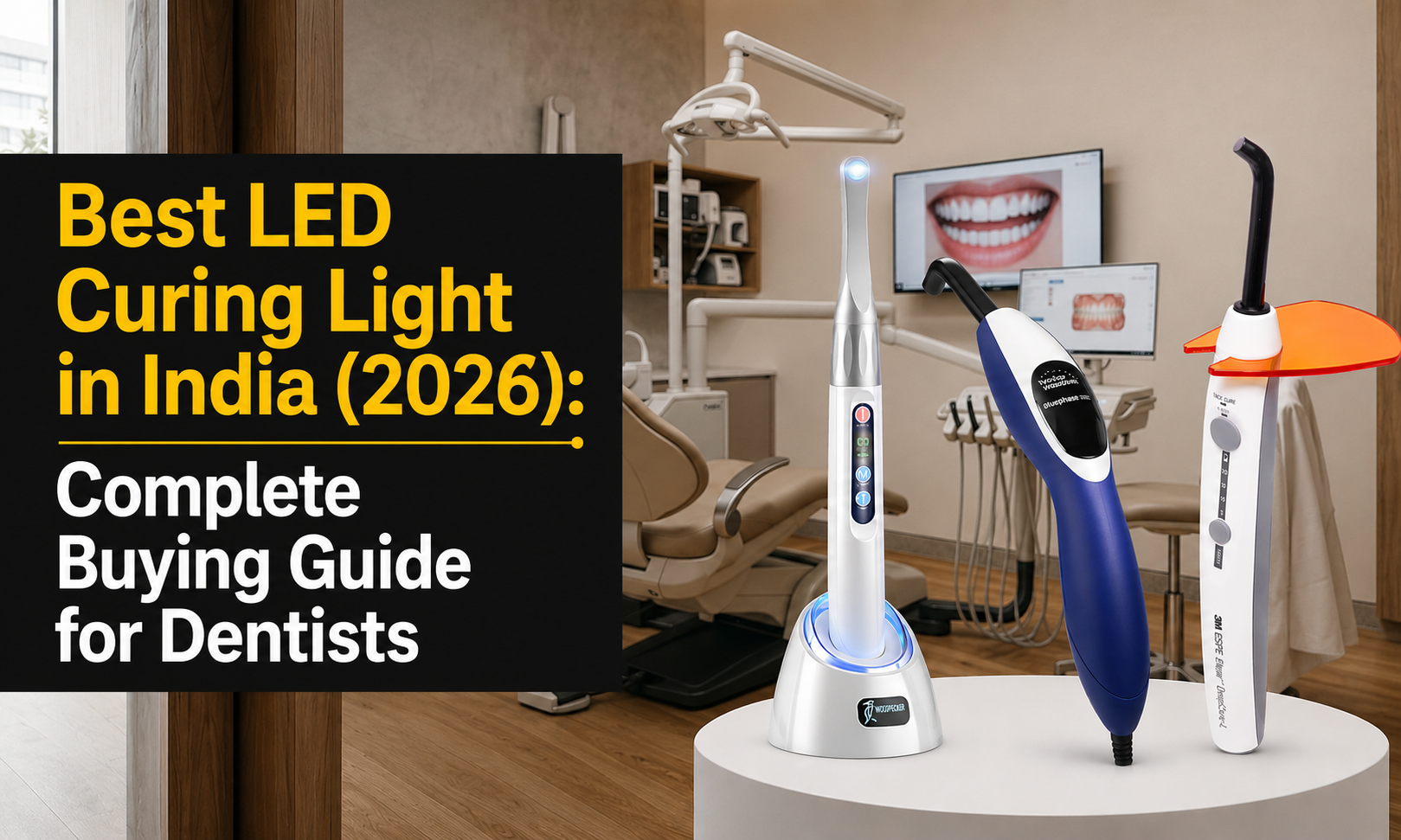
Best LED Curing Light in India (2026): Complete Buying Guide for Dentists
If you've been using the same curing light for the last 5 years, this is a good time to reassess. The best LED curing light in India today delivers significantly more irradiance, better wavelength coverage, and faster cure times than units from even three years ago - and the price gap between entry-level and professional-grade has narrowed considerably. Whether you're equipping a new clinic or upgrading an existing one, this guide covers everything that actually matters clinically, without the brochure language.
Why Your Curing Light Choice Matters More Than You Think
Most of us learned to cure for 20–40 seconds and move on. The reality is that under-curing is one of the most common - and clinically invisible - causes of premature restoration failure. An inadequate irradiance output, a mismatched wavelength, or a tip held too far from the restoration can dramatically reduce the degree of conversion even if the composite looks set on the surface.
The shift from halogen to LED eliminated most of the degradation issues (no bulb replacement, consistent output), but LED units are not equal. Irradiance values, wavelength range, curing modes, and tip diameter vary considerably across brands and price points. And with bulk-fill composites and dual-cure materials now standard in most clinics, the requirement for a unit that covers both camphorquinone (CQ) at ~470 nm and alternative photoinitiators like Ivocerin at ~400–420 nm has become clinically relevant.
Journal of Conservative Dentistry and Endodontics, "Effect of monowave and polywave light curing on the degree of conversion and microhardness of composites with different photoinitiators": https://pmc.ncbi.nlm.nih.gov/articles/PMC9795691/
Types of LED Curing Lights: Monowave vs Polywave
Monowave units emit a single peak around 460–470 nm. These work perfectly well for conventional composites and adhesives where camphorquinone is the primary photoinitiator. The majority of mid-range units sold in India are monowave.
Polywave (broadband) units emit across a wider spectrum - typically 385–515 nm - covering both CQ-based and alternative photoinitiator materials. This matters when you're routinely using Ivoclar materials (Tetric N-Ceram, IPS Empress Direct, adhesives with Ivocerin), ceromer cements, or certain SDR materials where a narrow-spectrum monowave light may underperform.
If your practice is predominantly composite restorations with conventional adhesives and you're price-conscious, a monowave at ≥1200 mW/cm² is perfectly adequate. If you use a wider variety of materials - particularly Ivoclar composites and dual-cure cements - a polywave unit is the clinically smarter investment.
Key Parameters to Evaluate Before Buying
Irradiance (mW/cm²): The single most important number. Minimum 1000 mW/cm² for clinical adequacy. 1500+ mW/cm² for standard use. 2000–3000 mW/cm² for turbo/rapid modes and bulk-fill composites.
Wavelength range: 460–470 nm is adequate for CQ-based materials. 385–515 nm (polywave) is for broader material compatibility.
Tip diameter: Standard 8 mm covers most restorations. Wider 10–13 mm tips for bulk-fill work. Some units offer interchangeable tips - a useful feature for anterior/posterior versatility.
Curing modes: Standard, high-power/turbo, and ramp/pulse modes. Ramp and pulse modes are useful for shrinkage stress reduction in deep cavities or large Class II restorations, though evidence for clinical superiority over standard mode is mixed.
Corded vs cordless: Cordless offers complete freedom of movement and is the standard for most modern clinics. Battery performance and charging base stability matter - cheap cordless units often show an output drop as the battery depletes. Corded units guarantee consistent output, useful in high-volume practices where a cordless unit may not fully charge between patients.
Weight and ergonomics: Less discussed but clinically relevant. A heavy pistol-grip unit held at an angle in a posterior quadrant for 20 seconds gets fatiguing quickly in a busy session.
Top LED Curing Lights Available for Dentists in India (2026)
3M ESPE Elipar DeepCure L
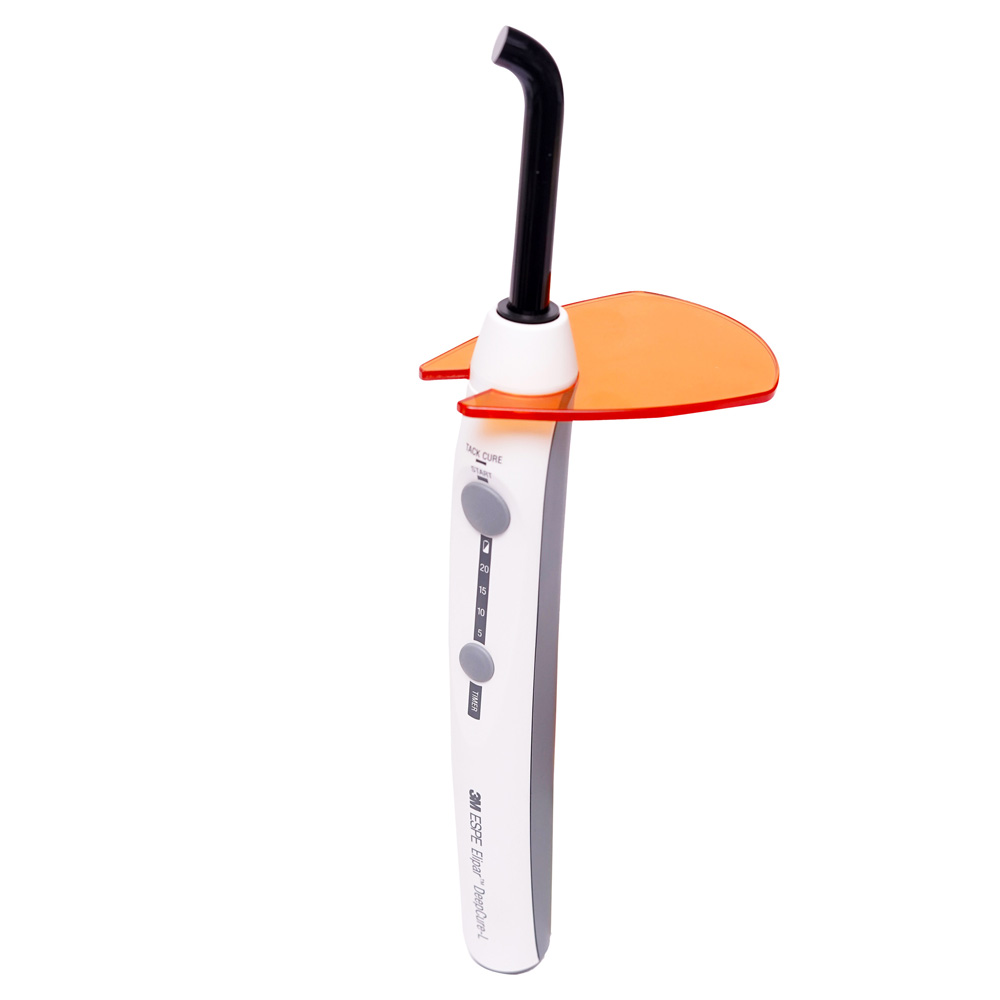
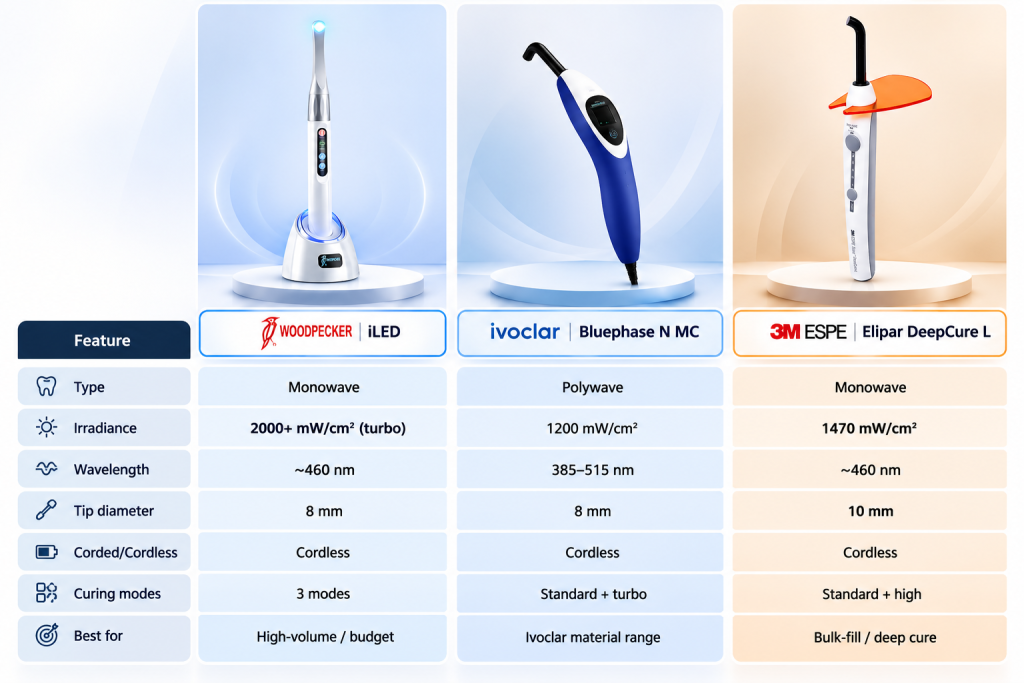
The DeepCure L is one of the strongest monowave LED curing lights available in India. It delivers 1470 mW/cm² across a 10 mm tip - a wider-than-average tip size that reduces the need for multiple cure positions in Class I and Class II restorations. The optics are specifically designed for deep-cure applications, making it well-suited for bulk-fill composites. Build quality is excellent; the cordless design is robust, and the battery retains consistent output through a full clinical session. At ₹53,990 on Dentosky, it sits at the premium end of the market but represents genuine clinical value if you're doing high volumes of posterior composite work.
Ivoclar Bluephase N MC
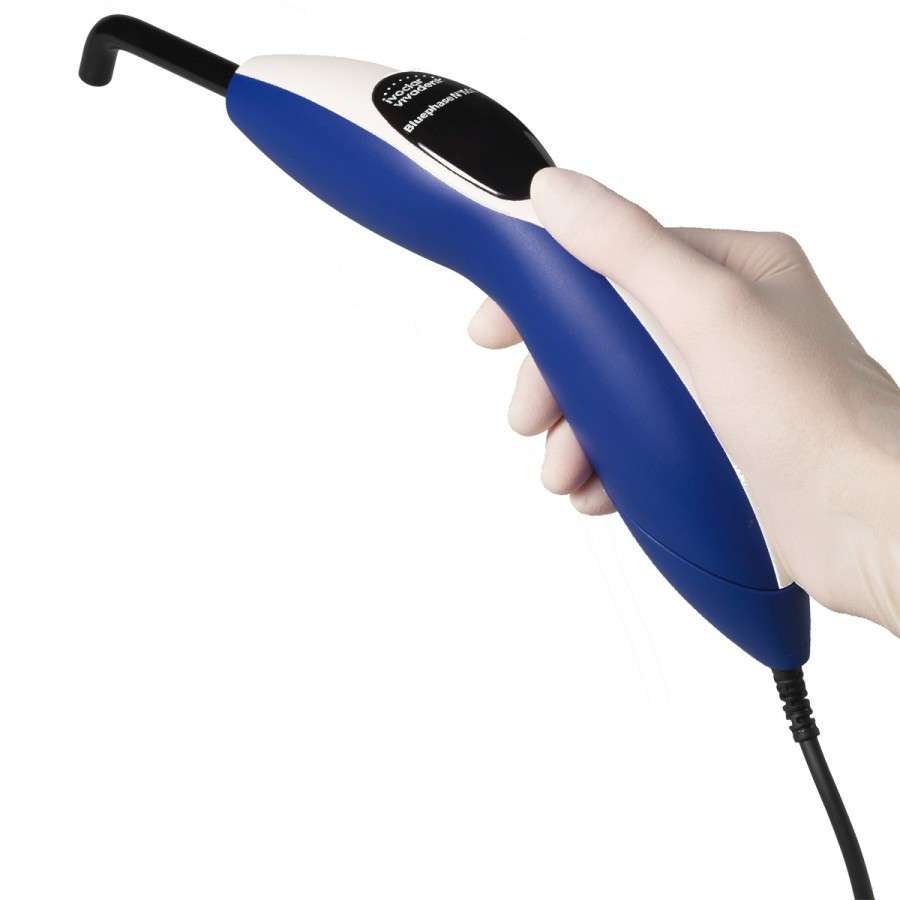
The Bluephase N MC is a polywave LED curing light operating at 385–515 nm, making it Ivoclar's recommended companion light for their full material range - Tetric N-Ceram, IPS Empress Direct, adhesives, and dual-cure cements. Irradiance is rated at 1200 mW/cm² in standard mode. The key clinical advantage is its photoinitiator coverage: if you're using Ivocerin-containing materials (Tetric EvoFlow, IPS Empress Direct), this light ensures complete polymerisation in a way that monowave units cannot guarantee. If Ivoclar composites and cements make up a significant part of your workflow, this is the logical pairing. Available at ₹23,275 on Dentosky.
Woodpecker iLED
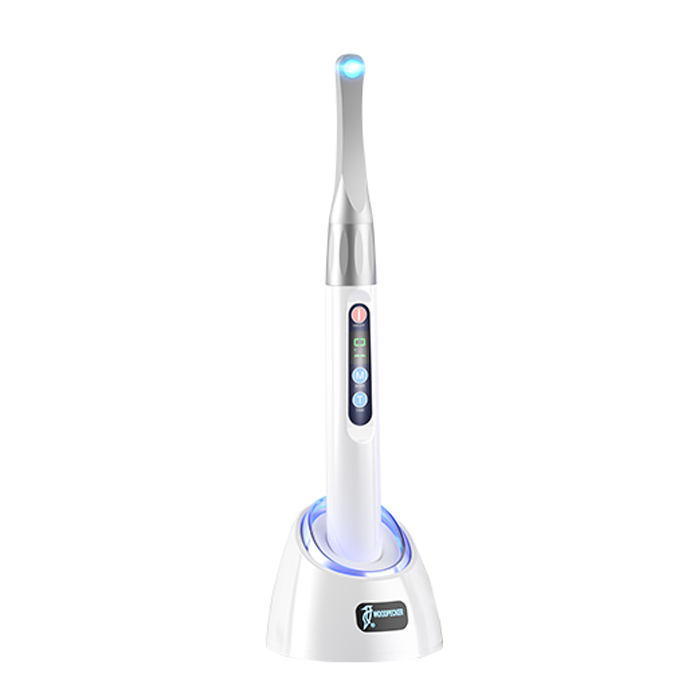
The iLED is Woodpeckers' high-output unit with 1-second curing capability at approximately 2000+ mW/cm² in turbo mode. It offers three curing modes and solid battery performance. For dentists who want high irradiance at an accessible price, the iLED delivers very good value. Particularly useful in busy clinics where chair time matters. Available at ₹4,700 on Dentosky, making it one of the most cost-efficient high-output options in the Indian market.
Comparison Table
Which One Should You Choose?
Choosing the right LED curing light for your practice depends on your material workflow more than your budget. The answer depends on your material workflow more than your budget:
If you predominantly use Ivoclar materials - Tetric N-Ceram, IPS Empress Direct, Bluephase adhesive systems - go with the Bluephase N MC. The polywave coverage isn't a marketing feature; it genuinely matters for Ivocerin-containing composites, where a monowave unit will underperform in terms of degree of conversion.
If your focus is posterior composites and bulk-fill - particularly 3M Filtek One or similar - the Elipar DeepCure L's 10 mm tip and 1470 mW/cm² output is purpose-built for this. It pairs logically if you're already using 3M restorative materials.
If you're setting up a first clinic or need a reliable backup unit, the Woodpecker iLED at ₹4,700 delivers more output than its price suggests. For a clinic using conventional composites and standard adhesives, this unit performs consistently and doesn't ask you to compromise clinically. It also makes an excellent second unit for practitioners who want a budget-friendly backup when their primary unit is charging.
You can browse all three units in the LED Light Cure Unit category on Dentosky.
Clinical Tips Most Dentists Overlook
Tip-to-restoration distance: Every millimetre of distance costs you irradiance. Output can drop by 30–50% at 8–10 mm from the restoration surface. Get as close as possible without touching, and use a transparent matrix band or shield where visibility requires it.
Output verification: Curing light radiometers (curing light meters) are inexpensive and worth having. An in-clinic check every 2–3 months catches output degradation before it affects your restoration quality. This is especially important for units used heavily across a high-volume practice.
Curing time for dark/opaque shades: Darker shades absorb more light before it reaches depth. Add 20–30% to your standard cure time for A3.5, A4, and any opaque shade, regardless of what your unit's specifications claim in standard mode.
Autoclavable light shields: Use them, change them, and check the cure shield isn't absorbing output. Old, scratched shields can reduce effective irradiance significantly.
FAQ
Does a higher irradiance output always mean better curing?
How often should I replace or service my curing light?
Is a turbo/1-second cure clinically safe for all composites?
Can one curing light handle all materials in the clinic?
Where to Source
All three LED curing lights reviewed here - the 3M ESPE Elipar DeepCure L, Ivoclar Bluephase N MC, and Woodpeckers iLED - are available on Dentosky with pan-India delivery. Pricing is competitive, and units are genuine brand stock. If you're also planning a broader clinic setup or equipment upgrade, the Dental Clinic Equipment Cost guide and Dental Clinic Setup Checklist on the Dentosky blog cover the full picture.