
Best Dental Bonding Agent in India (2026): A Complete Buying Guide for Dentists
Choosing the right dental bonding agent in India has become more complex - not less - as the market has expanded. A decade ago, most practices ran on one or two systems. Today, between universal adhesives, 6th generation self-etch systems, economy bonds for high-volume cases, and premium MDP-based options, the shelf space has grown considerably. The clinical question is the same as it always was: which adhesive gives you reliable, long-term bond strength with minimal technique sensitivity - at a price that makes sense for your practice volume?
This guide covers the key dental bonding agent in India options currently on the market, breaks down the clinical differences that actually matter, and helps you match the right product to the right case.
Understanding the Generations - What Actually Matters Clinically
The generational classification of bonding agents is frequently taught and frequently misunderstood. For practical clinical decision-making, what matters is the etching strategy and number of steps, not the generation number.
| System Type | Steps | Etching Mode | Technique Sensitivity |
| Total-etch (3-step) | Etch + Primer + Bond | Phosphoric acid separate | High |
| Total-etch (2-step) | Etch + Combined primer/bond | Phosphoric acid separate | Moderate |
| Self-etch (2-step) | Self-etching primer + Bond | Built-in | Low–Moderate |
| Self-etch (1-step) | All-in-one | Built-in | Low |
| Universal | 1-step, any mode | Total / Self / Selective etch | Low–Moderate |
The current clinical consensus, supported by a 2022 systematic review and meta-analysis published on NIH/PMC, is that universal adhesives containing the functional monomer 10-MDP demonstrate the most consistent bond strength and long-term durability across etching modes. 10-MDP forms stable calcium-phosphate complexes with hydroxyapatite at the dentin interface, protecting the hybrid layer from hydrolytic degradation over time - which is the primary failure mode in most adhesive restorations.
Top Dental Bonding Agent Options in India (2026)
1. 3M Single Bond Universal Adhesive - Best Overall Universal
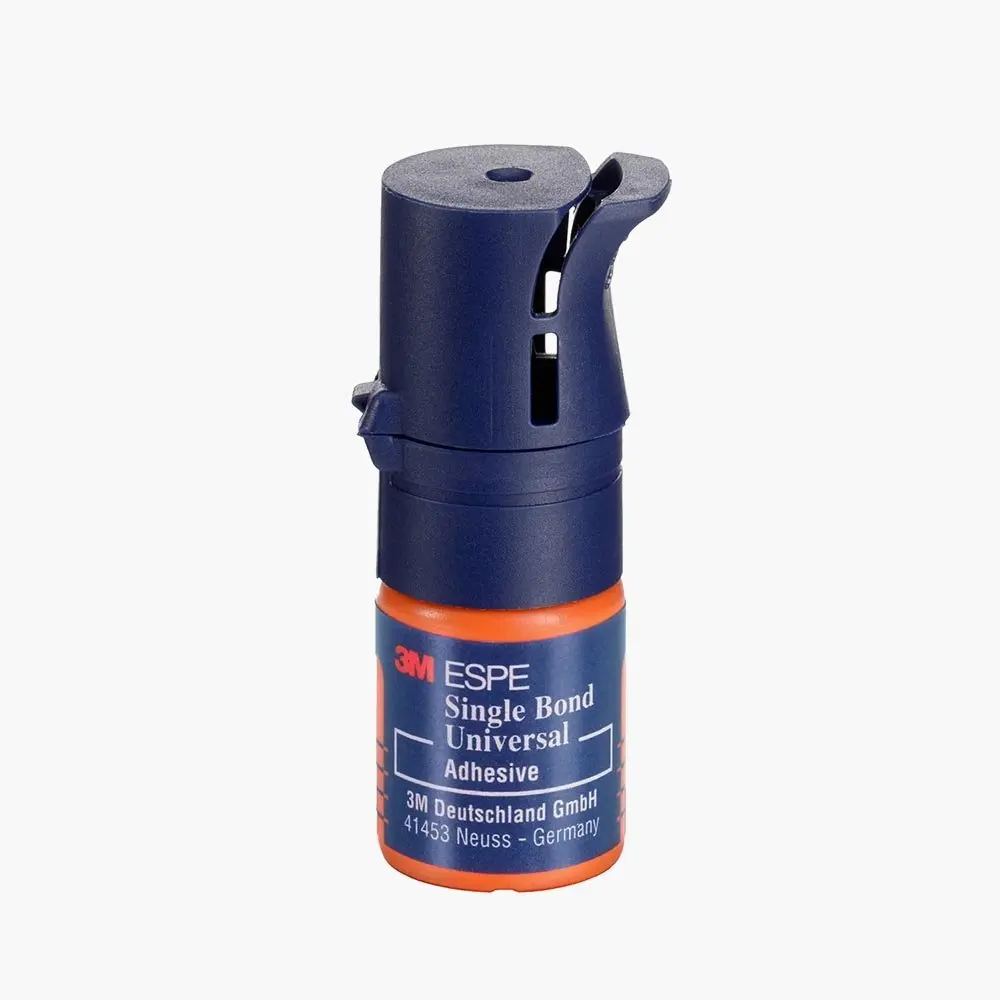
3M Single Bond Universal is the benchmark universal adhesive in India and globally. It contains 10-MDP, operates across all three etching modes, bonds reliably to enamel, dentin, zirconia, metal, and glass ceramics without a separate primer, and requires no refrigeration - a practical advantage in Indian clinic conditions.
Key specs:
- Generation: 8th (Universal)
- Etching mode: Total etch / Self-etch / Selective etch
- Functional monomer: 10-MDP
- Compatible with: Direct composites, indirect ceramics, zirconia, metal
- Price: Starting at ₹4,066
Clinical verdict: The best single adhesive to stock if you want one system that handles both direct and indirect cases. Its selective etch mode on enamel with self-etch on dentin gives you the best of both worlds in terms of bond strength and reduced sensitivity.
2. Kuraray Clearfil SE Bond - Gold Standard Self-Etch
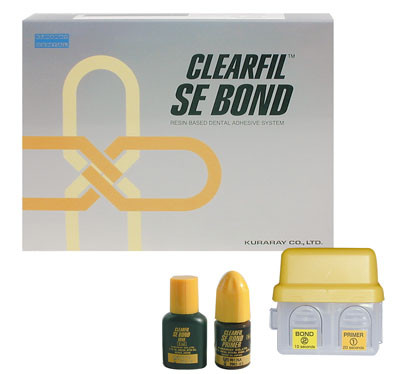
Clearfil SE Bond from Kuraray has decades of clinical evidence behind it - more long-term data than almost any other bonding agent in practice. As a 6th-generation two-step self-etch system, it eliminates phosphoric acid etching of dentin, significantly reducing postoperative sensitivity, making it particularly reliable for deep cavities and patients with a history of sensitivity complaints.
Key specs:
- Generation: 6th (Two-step self-etch)
- Functional monomer: 10-MDP
- Steps: Self-etching primer + Bond (separate)
- Price: ₹3,909–₹7,605 (kit options)
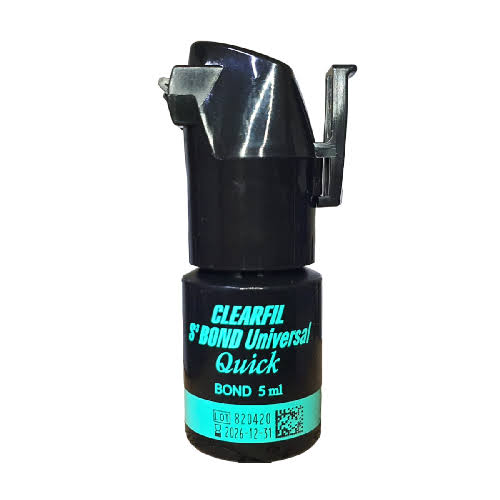
Clinical verdict: If you want a system with the longest clinical track record for dentin bonding - especially in posterior restorations where sensitivity is a concern - Clearfil SE Bond remains the most evidence-backed option on the Indian market. If you prefer a faster one-step workflow, its successor Clearfil Tri-S Bond Universal Quick offers the same 10-MDP chemistry in a universal single-coat format.
3. Ivoclar Tetric N-Bond Universal - Best Pairing for Ivoclar Composites
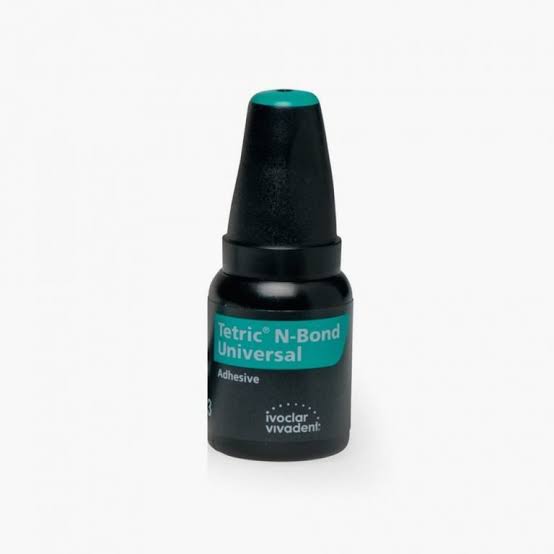
If your restorative workflow uses Tetric N-Ceram or Filtek Z350 XT, the Ivoclar Tetric N-Bond Universal is the natural adhesive companion - particularly for Tetric N-Ceram, where material compatibility is verified by the manufacturer.
Key specs:
- Generation: Universal
- Etching mode: Total etch / Self-etch / Selective etch
- Available formats: Bottle, multiple pack sizes
- Price: ₹2,201–₹4,144
Clinical verdict: For practices already running an Ivoclar restorative system, keeping this in-house simplifies material compatibility across the workflow - particularly when paired with Tetric N-Ceram for daily restorative cases.
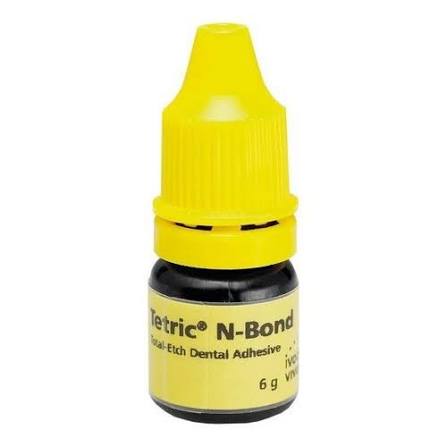
For total-etch cases where you prefer the simplicity of a proven 5th-generation system, Ivoclar Tetric N-Bond (non-universal) remains a reliable and cost-effective option at ₹2,018.
4. Rident R Bond Universal - Best Budget Universal
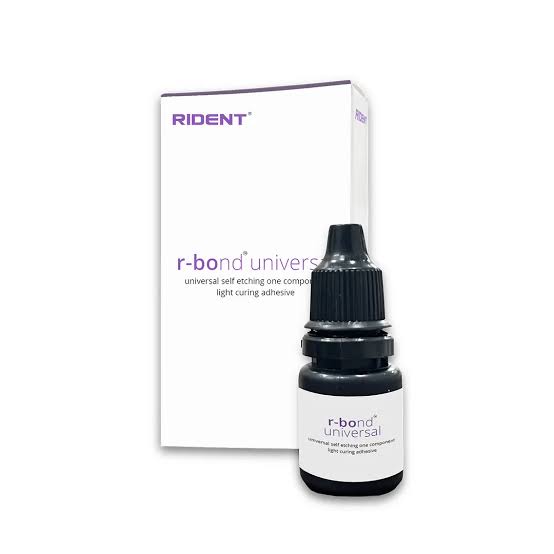
Rident R Bond Universal at ₹1,200 is the most affordable universal adhesive in this lineup. For high-volume clinics doing Class I and Class II routine restorations where the priority is throughput over premium aesthetics, this fills a genuine gap.
Key specs:
- Type: Universal adhesive
- Etching mode: Total etch / Self-etch
- Price: Starting at ₹1,200
Clinical verdict: Use this for posterior routine work where case complexity is low and volume is high. Not the first choice for anterior aesthetic cases or indirect restorations.
5. Te-Econom Bond - Starter and Student Pick
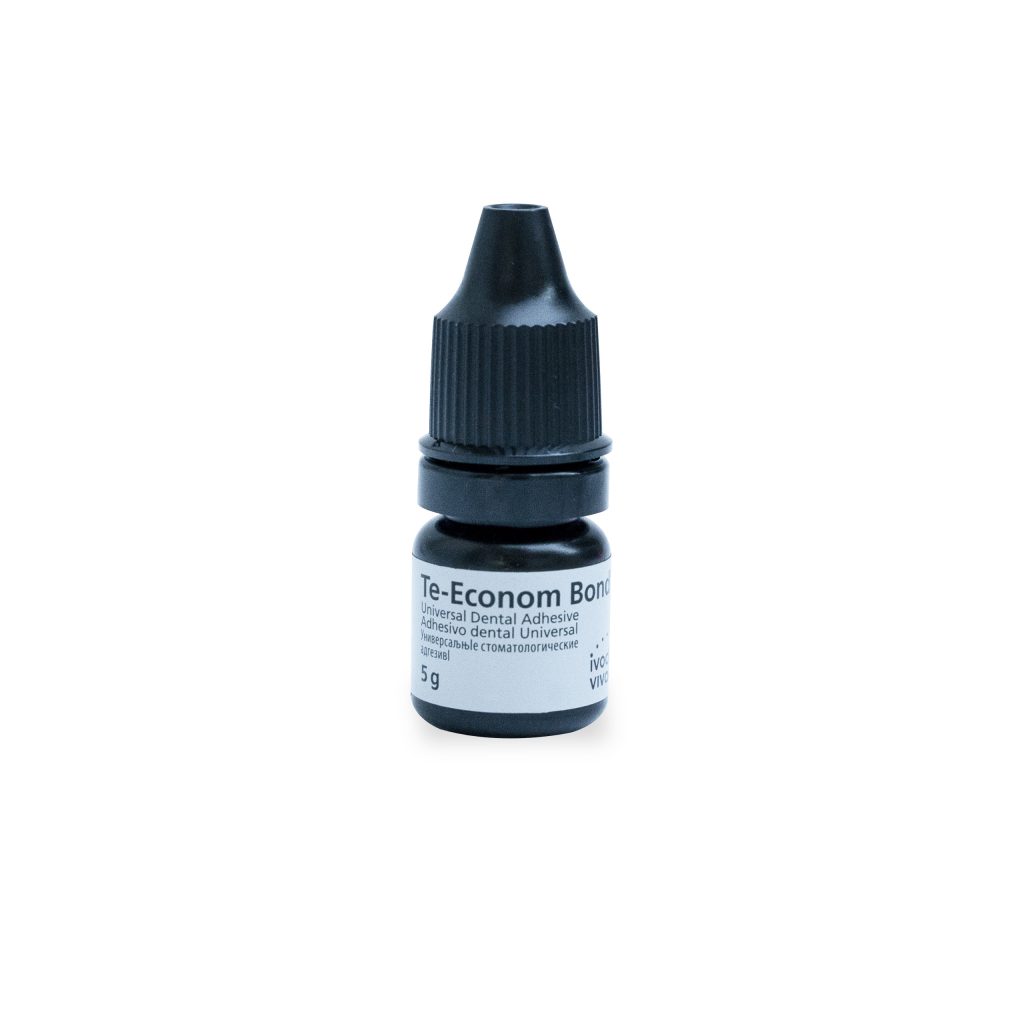
Te-Econom Bond from Ivoclar is a single-component, light-curing total-etch adhesive designed for straightforward cases. At ₹871, it is the most economical option in the category and well-suited for dental students, new graduates setting up practice, or clinics where bonding agent usage is low.
Price: ₹871
Master Comparison Table
| Product | Type | Etching Mode | 10-MDP | Best For | Price |
| 3M Single Bond Universal | Universal | All 3 modes | Yes | All cases, indirect too | ₹4,066 |
| Clearfil SE Bond | 6th gen self-etch | Self-etch | Yes | High-evidence dentin bonding | ₹3,909+ |
| Clearfil Tri-S Bond Universal Quick | Universal | All 3 modes | Yes | Fast self-etch universal | ₹4,675 |
| Tetric N-Bond Universal | Universal | All 3 modes | Yes | Ivoclar composite pairing | ₹2,201+ |
| Tetric N-Bond | 5th gen total-etch | Total etch | No | Routine total-etch cases | ₹2,018 |
| Rident R Bond Universal | Universal | Total/Self-etch | - | Budget posterior work | ₹1,200 |
| Te-Econom Bond | Single-component | Total etch | No | Students, starter clinics | ₹871 |
Total Etch vs Self-Etch vs Selective Etch - Which Mode to Use
This is the clinical question that comes up most in practice. The answer depends on the substrate and case type, not personal preference.
Total etch on enamel: Phosphoric acid etching of enamel creates the strongest enamel bond through micromechanical interlocking. For anterior cases, veneers, and cases where enamel bonding is the primary retention mechanism, total etch on enamel is still the most reliable strategy.
Self-etch on dentin: Self-etching dentin avoids the risk of over-drying dentin after phosphoric acid application - the most common technique error in total-etch systems. For posterior cases and deep cavities, self-etch on dentin reduces post-operative sensitivity meaningfully.
Selective etch - the practical sweet spot: Selective etch on enamel only, followed by self-etch on dentin, gives you strong enamel bonds without the sensitivity risk of over-etching dentin. 3M Single Bond Universal and Clearfil Tri-S Bond Universal Quick are both well-suited to this approach. For most clinical scenarios in 2026, this is the mode most experienced restorative dentists default to.
Technique Errors That Cost You the Restoration
Even the best adhesive fails when application is suboptimal. The errors that cause most bonding failures in practice:
Inadequate application time and agitation. Most universal adhesives require 20 seconds of active scrubbing into the dentin surface for adequate monomer penetration. Passive application for 5–10 seconds is the most common error and results in a thinner, weaker hybrid layer.
Incomplete solvent evaporation. Residual solvent (acetone or ethanol) left in the adhesive layer before light curing creates a weak, permeable interface. Air-dry thoroughly until no visible moisture remains - the adhesive surface should appear glossy but immobile.
Curing through bulk composite. Light-curing the adhesive through an already-placed increment of composite significantly reduces the energy reaching the adhesive layer. Always cure the adhesive separately before placing the first composite increment.
Over-etching dentin with phosphoric acid. In total-etch mode, dentin etching beyond 15 seconds demineralises deeper than the resin monomers can penetrate, leaving exposed, unsupported collagen that degrades over time. 15 seconds on dentin is sufficient - and in many cases, selective etch avoids this risk entirely.
A Note on Product Authenticity
Bonding agents are particularly vulnerable to performance loss when sourced from unverified channels. MDP-containing adhesives are sensitive to heat exposure and shelf life - product that has sat in poor storage conditions or is close to expiry can show reduced bond strength with no visible change in the bottle. Counterfeit and grey-market versions of popular adhesives also circulate in the Indian market. Always check batch numbers against manufacturer records and source from authorised distributors.
Where to Buy in India
All the dental bonding agent in India options covered in this guide are available on Dentosky with genuine stock and pan-India delivery. If you are stocking both a premium universal and a budget option for routine cases, ordering together keeps your restorative workflow covered without overspending on a single system.
[Browse Bonding Agents on Dentosky]